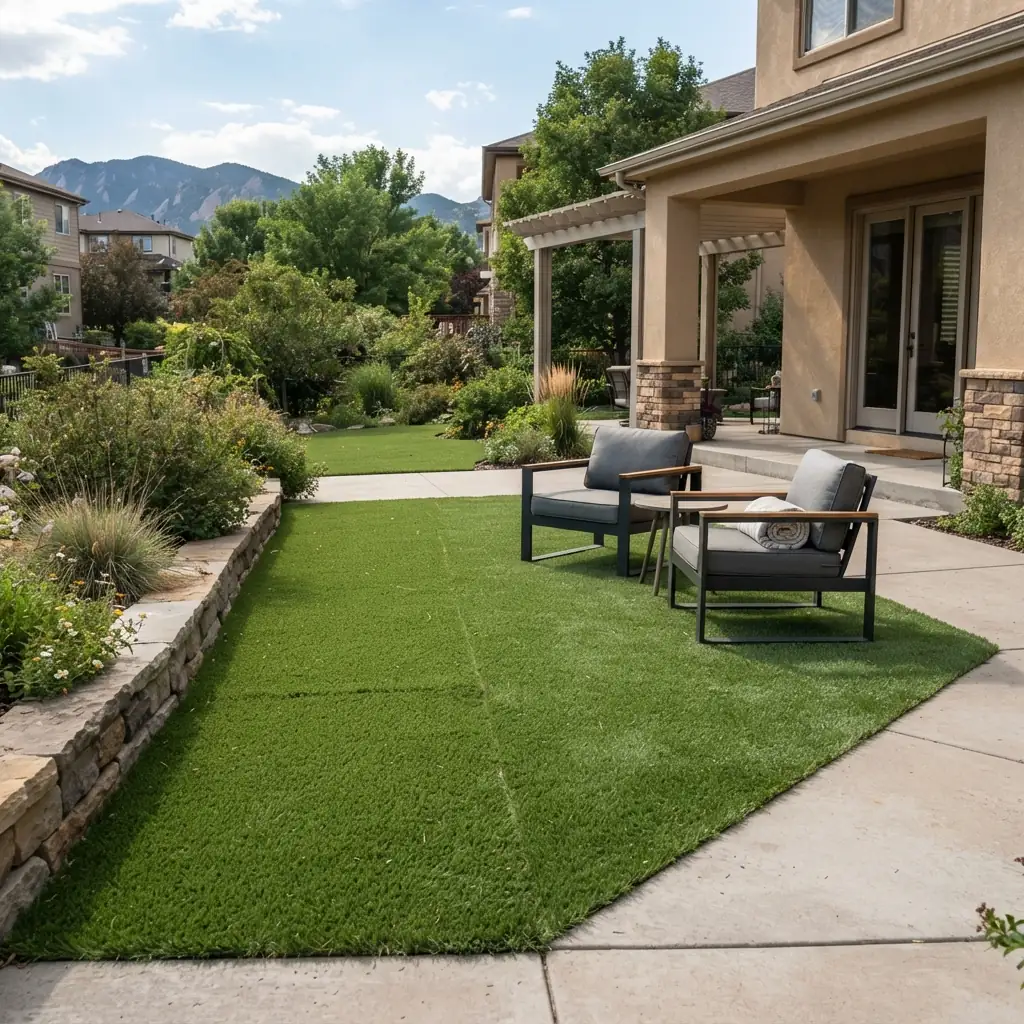
A plain concrete patio can feel hard on little knees and hot under bare feet. Laying artificial grass over it gives kids, dogs and patio chairs a softer spot without breaking up the slab. Wheat Ridge homeowners reach an independent local turf provider through us for turf over concrete.
Look at the Slab First
Turf takes the shape of whatever is under it, so the slab has to be in decent condition. Wide cracks, lifted sections and dips that collect water will show through. A provider will look for those and may recommend grinding, patching or a leveling compound before anything else.
They also note how the slab sheds water. Most patios tilt a little away from the house, and the turf system has to keep that route clear so rain and snowmelt can drain off.
Cushioning and Drainage
A foam underlay gives the surface some give, so it feels closer to a lawn than a sidewalk. Some pads have grooves underneath that guide water toward the slab edge. Skip the pad and turf on concrete can feel thin and may stay wet below.
Concrete installs often use less infill. The provider will suggest an amount that keeps the fibers upright without spilling off the sides.
Holding the Edges Down
On concrete, turf is usually fixed with outdoor adhesive or heavy duty tape along the outside edge and at each seam. Where the patio runs into a lawn or flower bed, the edge can be tucked in or capped with trim. Steps and door thresholds take careful cutting so nobody trips.
Leave clearance at doors so they still swing open once the pad and turf are in.
Plan Turf for Your Slab
Tell us roughly how big the patio or slab is, what shape it is in and how your family plans to use it. An independent local turf provider who covers Wheat Ridge gets those details from us and will come out to quote it.