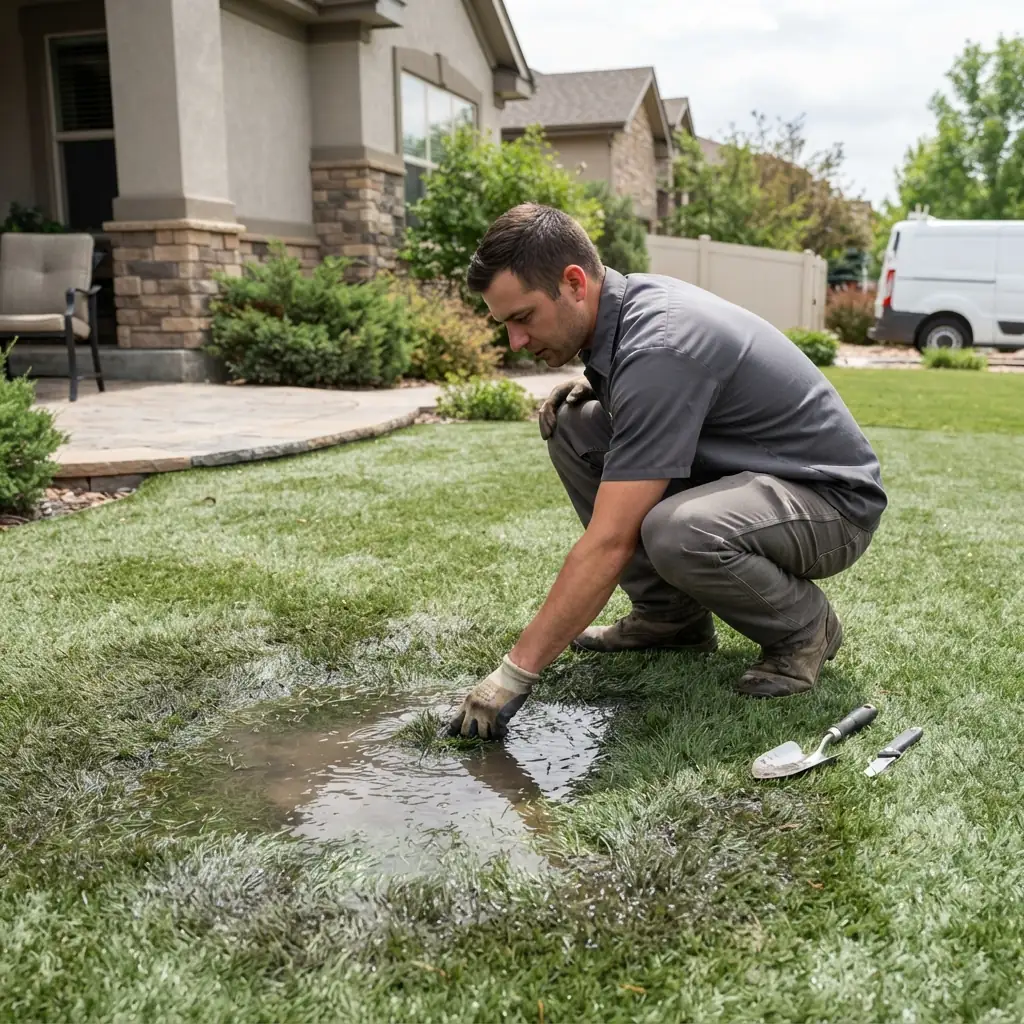
Turf that went in right should handle rain and snowmelt with no puddles. If water sits on top or one corner stays squishy for days, something underneath needs a look. We pair Wheat Ridge homeowners with an independent local turf provider who can find the cause and suggest a repair.
Why Water Usually Pools
A base that was compacted unevenly can sink over time and leave dips that hold water. Turf over clay with too little crushed gravel underneath may drain slowly. Edges set a bit higher than the rest of the yard can hold water in instead of letting it flow off.
Water from elsewhere plays a part too. A downspout pointed at the turf, a sprinkler zone nobody capped or a neighbor's yard tilting toward yours can send in more water than the base can take.
How the Cause of Pooling Gets Found
The provider usually begins by watching where water runs during a hose test or after a storm. They check the slope of the yard, the shape the edges are in and where downspouts and sprinklers point. Peeling back a section of turf near the trouble spot shows whether the base has sunk or the backing is clogged.
After that, they can tell you whether it needs a spot base repair, regrading part of the yard or a new drain like a gravel trench or a longer downspout.
What a Fix Might Involve
Small dips are usually fixed by folding the turf back, adding and packing base gravel, then laying the turf back down and brushing in infill. Bigger problems may mean regrading a section so it tilts away from the house, or adding a perforated pipe or gravel channel to move water off.
Fixing drainage rarely means tossing the turf. If the turf is still in good condition, it can usually be lifted, the base corrected and the same turf laid back in place.
Ask for a Drainage Check
Tell us where water gathers, how long it hangs around after rain and whether downspouts or sprinklers drain onto the turf. An independent local turf provider who covers Wheat Ridge gets those details from us and will set up a visit and quote any repair.