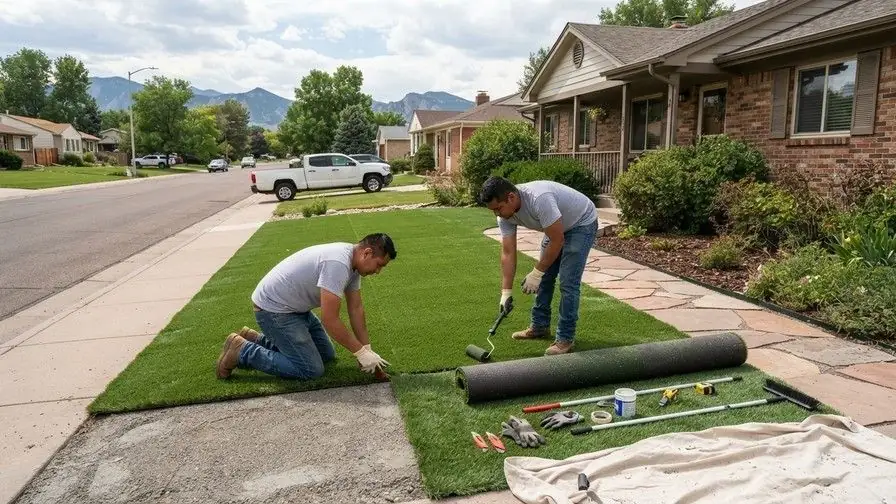
Deciding whether to give up the lawn is not always simple. Some Wheat Ridge families are more than ready to sell the mower, while others are not sure they want to lose the feel of real grass under bare feet. This article walks through the main trade offs so you can figure out what fits your yard and your household.
Is artificial grass a better choice than a real lawn?
Artificial grass versus a real lawn has no single winner for every yard. Turf comes out ahead on water, mowing and staying green through dry stretches, and it handles heavy traffic from kids and dogs. A real lawn is cheaper to start, stays cooler on hot days and keeps the soil alive. Lots of families do both, putting turf in high wear or hard to water spots and keeping some real grass or planting beds elsewhere.
Your Time and Your Water
A real lawn needs regular attention from spring to fall: mowing, edging, watering, fertilizing and reseeding bare spots. In a dry summer, keeping it green can mean running sprinklers several times a week. Artificial grass takes away almost all of that. Care boils down to blowing off leaves, a rinse now and then and brushing the busiest paths.
For families who travel, are short on time or just do not like yard work, that difference often settles it. For people who enjoy puttering in the yard, the hours a lawn takes may not feel like a cost at all.
Wear, Feel and Heat
Grass has a hard time where kids and dogs run the same route every day, and it thins out under trees and in heavy shade. Artificial grass stays even in those spots. It is also ready to use after rain, since a solid base drains fast instead of turning into mud.
On the flip side, real grass stays cooler under bare feet on a summer afternoon. Artificial grass can heat up in direct sun, although shade and a quick rinse help. Some people just love the softness and smell of a real lawn, and that is a perfectly good reason to keep one.
How Each Looks Season to Season
Artificial grass looks the same in March as in August, and plenty of people like that. No brown dormant months in winter and no scorched patches in late summer. Today's products with blended greens and a thatch layer look believable from the sidewalk.
A real lawn shifts with the seasons, greening up in spring and fading in the heat or cold. Some homeowners enjoy that cycle, and a healthy lawn can look fantastic. It really comes down to whether you value a steady look or a living one more.
Finding What Fits Your Yard
You do not have to choose one for the entire yard. Turf in the busy backyard with a smaller real lawn or planting beds out front is a popular mix. If you want to look into turf for some or all of your Wheat Ridge yard, an independent local provider can come take a look, and we can pass your request along.