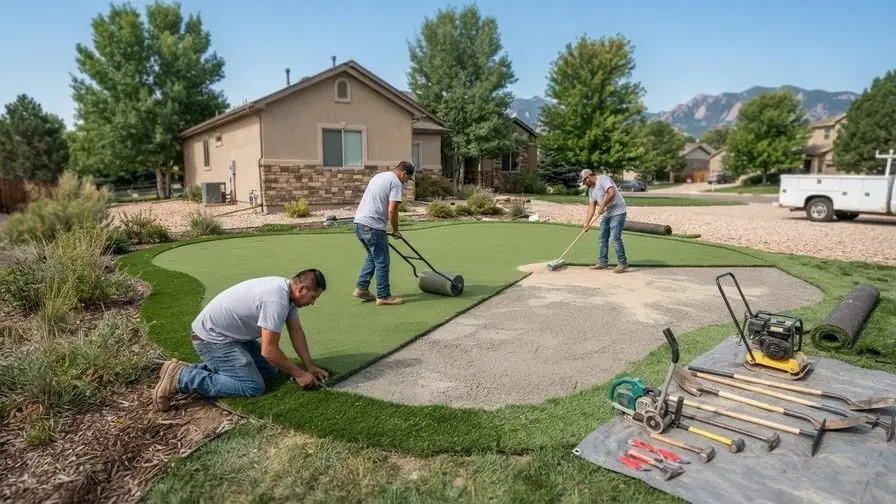
A backyard putting green is one of the most fun turf projects, and one of the more technical ones. How it rolls depends on decisions made well before the first putt. If you are picturing a green in your Wheat Ridge backyard, here is what goes into one and what to ask.
What goes into building a backyard putting green?
A backyard putting green sits on a compacted gravel base shaped with gentle slopes, covered with dense putting turf and filled with sand infill that sets the speed. Cups are set flush with the surface, and a fringe of longer turf usually frames the green. The size and layout depend on how you like to practice. A local provider can mark out options in your yard and explain how each one would play.
Figure Out How You Like to Practice
Short putts, long lag putts and reading breaks each call for a slightly different green. If you mostly want to drill three and four footers, a small green with one or two cups does the job. For lag practice, length matters more than width.
Breaks come from contours shaped into the base. If you want to practice reading putts, ask for mild slopes running different ways. Keep in mind that an overly dramatic green can be more frustrating than fun. Most backyard greens go for subtle movement.
Picking Putting Turf and Infill
Putting turf is shorter and denser than landscape turf, usually made of nylon or polyethylene fibers that let a ball roll smoothly. Different products roll at different speeds and react differently to chip shots. If you plan to chip onto the green, ask about turf that holds a shot.
Sand infill gets brushed into the fibers to firm up the surface and set the speed. More infill and more brushing generally make it firmer. The provider can explain how they tune a green and how you can tweak it later.
Where Cups and Fringe Go
Where the cups go shapes how the green plays. Spreading them across different slopes gets you more variety out of one green. Cups sit in sleeves set into the base so they stay level, and the flags can come out when you want a clean look.
A collar of longer turf around the green frames it, slows balls that roll off and helps it blend into the yard. Some homeowners add a small chipping spot or tee mat nearby. Plan those extras early so the whole layout fits together.
From First Idea to First Putt
Think about where the green would go, how big you want it and how you like to practice. Those answers drive the design. When you are ready, an independent local provider in Wheat Ridge who builds backyard putting greens can help, and we can pass your request along.